
Eric Ries introduced the Lean Startup methodology over a decade ago, and its principles remain foundational for modern startups. The core idea is simple: minimize waste by validating assumptions before committing resources.
The Build-Measure-Learn Loop
Build
Create the smallest possible version of your product that tests your core hypothesis. This isn't about building a minimal product — it's about building the minimum thing that lets you learn.
Measure
Define your success metrics before you build. What signal will tell you that your hypothesis is correct? Avoid vanity metrics like page views. Focus on actionable metrics:
- Conversion rates from visitor to sign-up
- Retention after 7, 14, and 30 days
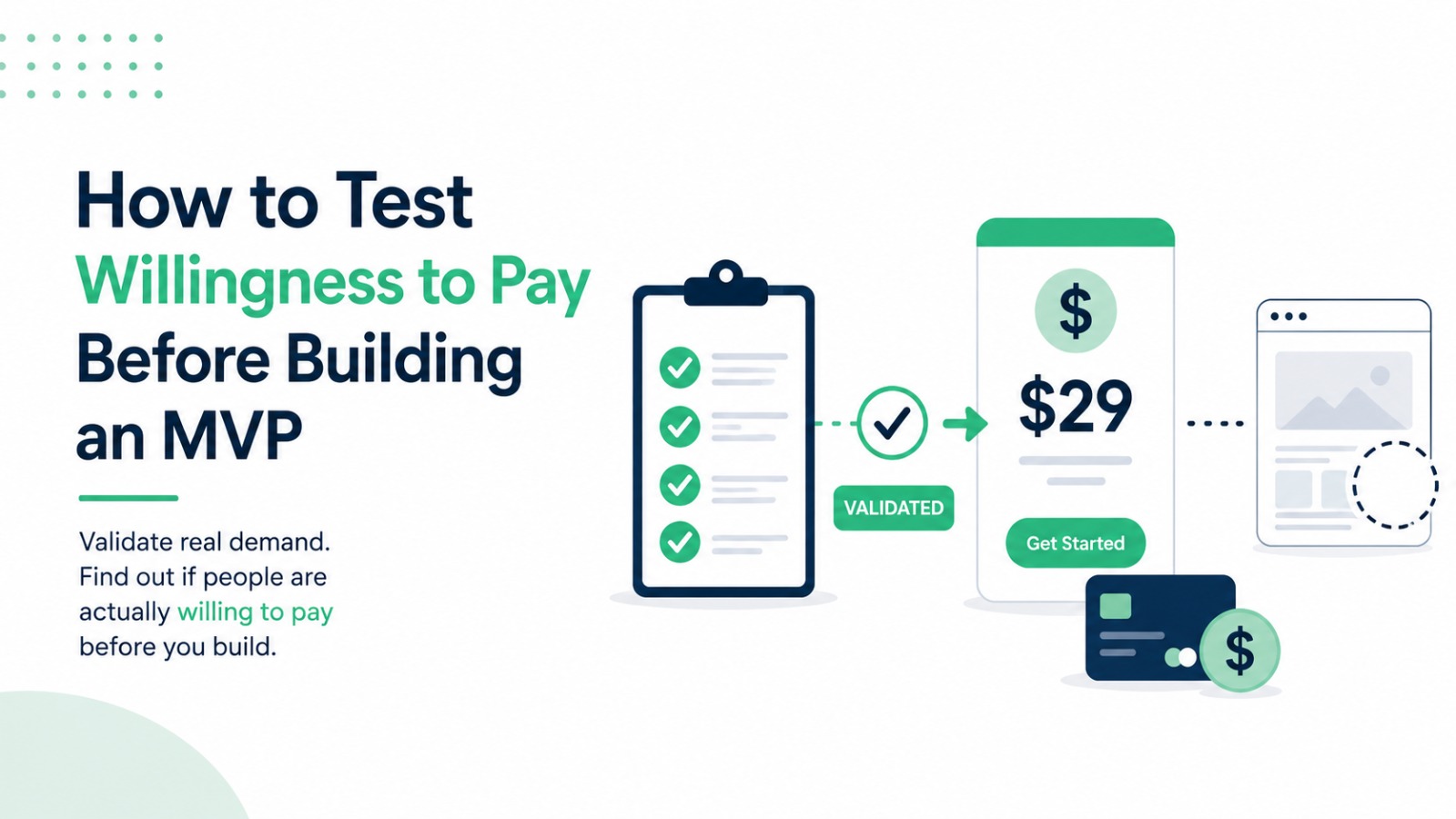
- Willingness to pay (trial to paid conversion)
- Net Promoter Score (NPS)
Learn
Analyze your data and decide: pivot or persevere? If your hypothesis is validated, double down. If not, adjust your approach.
Common Mistakes to Avoid
- Building too much before testing — you don't need a full product to learn
- Not defining clear hypotheses and metrics upfront
- Ignoring negative data because it contradicts your vision
- Pivoting too frequently without giving ideas enough time to show results
- Not talking to actual users — data alone doesn't tell the full story
The lean approach works because it reduces the cost of failure. Each iteration is small and fast, so you learn quickly without burning through your runway.
Pro tip: Before even building your first MVP, run a validation analysis. Worth Build can help you understand market conditions, competition, and feasibility so your first build cycle starts from an informed position rather than a blind guess.