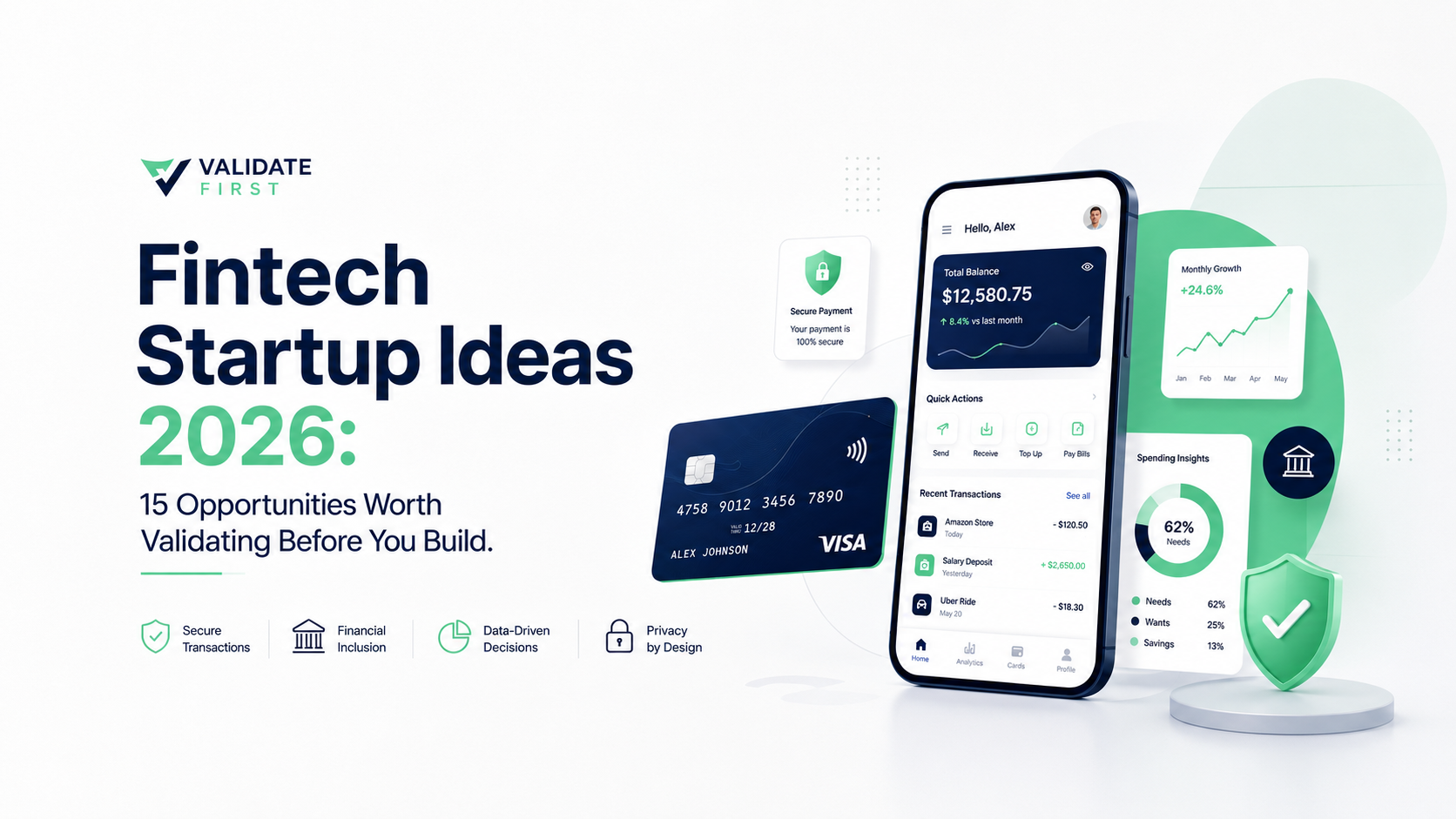
Fintech is not short on ideas. It is short on ideas that can survive regulation, distribution, trust, fraud risk, and real customer acquisition costs. That is why a strong fintech startup in 2026 should not start with a feature list. It should start with a painful financial workflow, a buyer who has budget, and a clear validation path before anyone writes code.
The strongest opportunities sit where financial operations are becoming more complex: AI-assisted fraud, embedded finance, payment infrastructure, cash-flow visibility, compliance evidence, and workflow automation. Those areas are not attractive because they sound modern. They are attractive because customers already spend money, time, and headcount trying to solve them.
Use this list as a validation map, not a build list. Pick one idea, define the narrowest customer segment, find people already describing the pain, and test whether they will book a call, share data, join a paid pilot, or pay for a manual version first. You can use WorthBuild’s market validation to pressure-test demand before committing to a product roadmap.
How to evaluate fintech startup ideas in 2026
- Is the problem tied to money, risk, compliance, fraud, cash flow, or operational cost?
- Can you reach a specific buyer, not just a broad user group?
- Is there a manual workaround or paid alternative already in use?
- Can the first version be delivered as a concierge service, audit, dashboard, or narrow workflow?
- Can you validate without touching regulated money movement too early?
Before choosing an idea, use WorthBuild’s Score Your Idea tool and Market Size Calculator to check whether the market, competition, and timing justify deeper work.
15 fintech startup ideas worth validating
1. AI fraud investigation workspace
Best for: Finance teams at fintechs, marketplaces, and lenders
Fraud analysts still jump between payment logs, KYC tools, spreadsheets, chargeback portals, and Slack. An AI investigation layer can group suspicious events, summarize evidence, recommend next actions, and create audit trails.
How to validate: Sell as a per-seat or per-case workflow tool. Validate with fraud teams by offering a paid concierge review of 25 suspicious cases before building the software.
2. Embedded finance compliance monitor
Best for: SaaS platforms adding payments, lending, cards, or wallets
Embedded finance is useful, but regulatory ownership and partner risk are harder than the launch page suggests. Platforms need help tracking program rules, disclosures, vendor obligations, and servicing issues.
How to validate: Start with one vertical such as payroll, logistics, or property management. Sell a paid policy-and-monitoring pilot to the ops or compliance owner.
3. Stablecoin payment operations dashboard
Best for: Cross-border businesses, payment processors, treasury teams
Stablecoins are becoming more relevant for settlement, but businesses need reconciliation, compliance checks, wallet monitoring, and treasury reporting before they can use them safely.
How to validate: Validate with businesses already using international contractors or suppliers. Start as a reporting layer rather than a wallet.
4. Invoice fraud detection for SMBs
Best for: Small businesses and accounting firms
AI-generated invoice fraud and vendor impersonation are making manual approval workflows weaker. SMBs need a simple way to flag changed bank details, unusual vendors, duplicate invoices, and suspicious payment timing.
How to validate: Begin with accounting firms because they see the same problem across many clients. Offer a paid audit of recent invoices.
5. Cash-flow forecasting for founder-led businesses
Best for: Bootstrapped startups, agencies, consultants, ecommerce operators
Founders do not need a CFO dashboard with 80 metrics. They need to know when cash gets tight, which bills are risky, and what decisions extend runway.
How to validate: Connect to Stripe, bank data, and accounting exports later. First validate with a spreadsheet-based concierge forecast.
6. Compliance-ready AI underwriting assistant
Best for: Alternative lenders and fintech credit teams
AI can speed up underwriting, but financial institutions need explainability, decision logs, model monitoring, and policy controls.
How to validate: Sell the first version as a decision-support tool, not an autonomous underwriter. Validate with manual policy reviews and a paid pilot.
7. Subscription payment recovery for niche SaaS
Best for: B2B SaaS companies with failed payments and overdue invoices
Payment failure recovery is often handled with generic dunning emails. Niche SaaS companies need workflows that combine billing data, customer health, CRM context, and personal outreach.
How to validate: Validate by recovering revenue manually for a few SaaS companies and charging a percentage of recovered cash.
8. Financial data cleanup API
Best for: Fintech builders and analytics teams
Dirty transaction data breaks budgeting apps, lending models, tax tools, and dashboards. A focused API that categorizes, deduplicates, and enriches transaction records can become infrastructure.
How to validate: Start with one use case such as merchant normalization for SMB expense tools.
9. AP approval copilot for remote teams
Best for: Distributed teams with multi-step approval flows
Remote teams approve invoices across email, Slack, Notion, and accounting software. This creates delays and weak controls.
How to validate: Validate with operations teams by running a paid approval-workflow cleanup and measuring time saved.
10. Fintech security questionnaire assistant
Best for: B2B fintech vendors selling to banks and enterprises
Security and vendor-risk questionnaires slow down sales. A specialized assistant can reuse approved answers, map evidence, and keep responses current.
How to validate: Start with fintech vendors that already lose time in enterprise sales. Charge per questionnaire or per user.
11. Revenue-based financing readiness checker
Best for: Small businesses exploring alternative capital
Many companies apply for financing before understanding their revenue quality, repayment capacity, and data gaps.
How to validate: Build a lead-generation product for lenders or a direct founder tool. Validate with a free score and paid advisory report.
12. Chargeback evidence builder
Best for: Ecommerce brands and marketplaces
Chargebacks are expensive because evidence collection is fragmented. A product can assemble order data, delivery proof, customer communication, and policy evidence into a response.
How to validate: Validate with a service-first offer: prepare 20 chargeback responses manually and compare win rate.
13. Payroll anomaly detector
Best for: SMBs, payroll bureaus, and HR teams
Payroll mistakes create employee trust issues and legal risk. Simple checks can catch unusual overtime, duplicate payments, missing deductions, and suspicious account changes.
How to validate: Start with payroll bureaus because one buyer can expose many businesses to the same product.
14. Vendor bank account verification layer
Best for: Finance teams paying many vendors
Vendor impersonation and bank detail changes are common fraud paths. A lightweight verification workflow can reduce risk before payments go out.
How to validate: Validate with finance teams that already require callback procedures or manual approvals.
15. Fintech launch cost planner
Best for: Founders planning regulated fintech products
Founders underestimate the cost of compliance, licenses, banking partners, KYC, customer support, fraud controls, and payment operations.
How to validate: This is a strong top-of-funnel product for WorthBuild. Pair it with idea scoring and market sizing.
Which fintech idea should you validate first?
The best first idea is usually not the biggest market. It is the idea where you can reach the buyer fastest and ask for a real commitment. For most founders, invoice fraud detection, chargeback evidence, cash-flow forecasting, and payment recovery are easier to test than heavily regulated banking infrastructure. They can start as services, audits, or dashboards before becoming software.
For fintech infrastructure ideas, be more careful. Stablecoin operations, underwriting, embedded finance, and compliance products can become valuable, but they require stronger domain expertise and more precise buyer validation. Use Competitor Analysis early to understand whether you are competing with software companies, consultants, payment processors, banks, or internal teams.
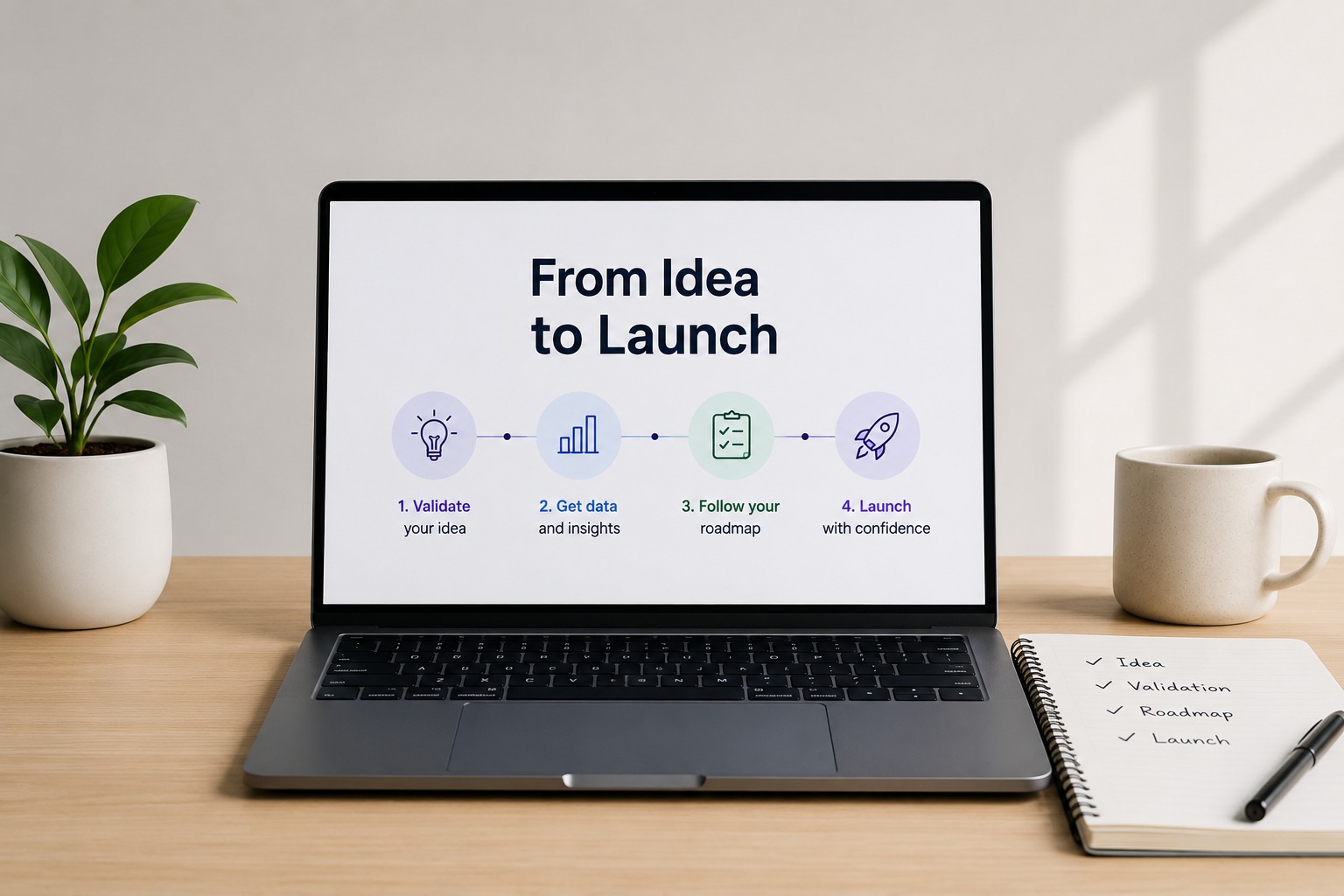
A simple fintech validation plan
- Choose one customer segment and one painful workflow.
- Find 30 potential customers discussing that workflow on Reddit, LinkedIn, niche forums, fintech communities, or industry Slack groups.
- Run 10 to 15 problem interviews without pitching the product first.
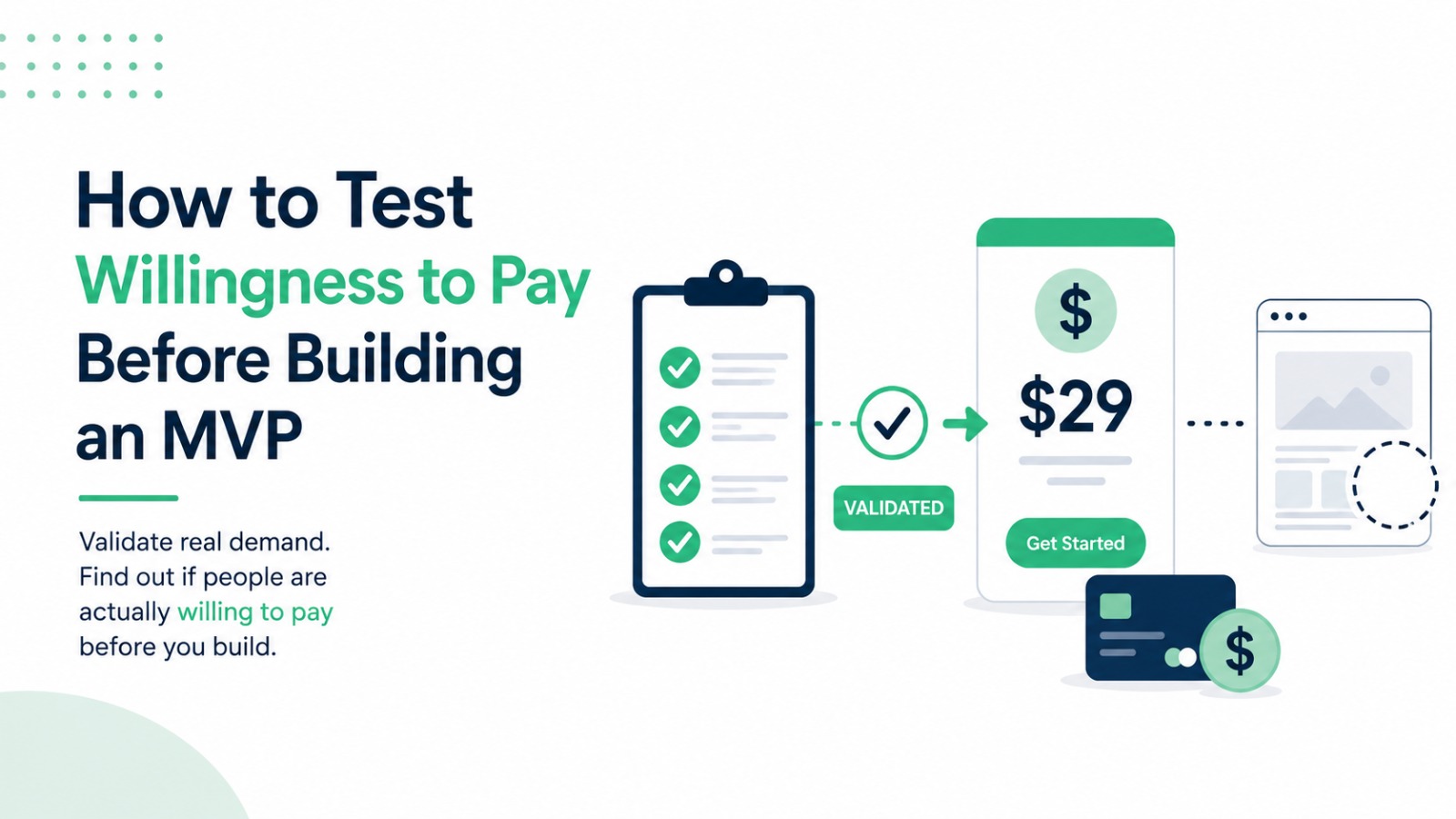
- Create a one-page offer with a visible price, expected outcome, and pilot timeline.
- Ask for a paid pilot, deposit, paid audit, or signed pilot agreement.
- Only build the MVP after at least a few buyers accept meaningful friction.
WorthBuild can help with the first step by surfacing people already discussing the problem and giving you ready-to-send outreach messages. Start from How Ihttps://worthbuild.io/#how_it_works or browse pre-built validation reports for examples of how demand signals are structured.
Before you build a fintech product, find out whether people are already asking for the problem to be solved. WorthBuild scans real communities, surfaces potential first customers, and gives you the demand signals, competitor data, TAM/SAM/SOM, and outreach messages you need before writing code. Validate your fintech idea free.
FAQ
What are the best fintech startup ideas for 2026?
The best fintech startup ideas for 2026 are problems tied to fraud, payments, compliance, cash flow, embedded finance, underwriting, and financial operations. The strongest ideas solve a painful workflow for a clear buyer with budget.
Is fintech still a good startup category?
Yes, but fintech is not easy. Founders need to validate buyer trust, compliance needs, data access, distribution, and willingness to pay before building.
What is the easiest fintech idea to start with?
The easiest ideas usually avoid regulated money movement at the beginning. Examples include invoice fraud audits, chargeback evidence building, cash-flow forecasting, and financial data cleanup.
How do I validate a fintech startup idea?
Start with a narrow customer segment, interview people with the problem, show a specific offer and price, then ask for a paid pilot, audit, deposit, or pre-order.
Should I build a fintech MVP before talking to customers?
No. Fintech MVPs can become expensive quickly. Validate the problem, buyer, compliance risk, and willingness to pay first.